Connect with Me


Featured Books

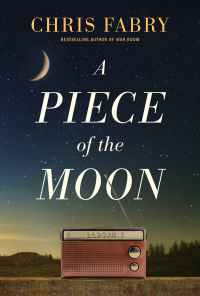
Latest Release!




Personal Stuff

- Chris Fabry
- Married to Andrea since 1982. We have 9 children together and none apart. Our dog's name is Tebow.
Friday, January 18, 2019
Early in 2018 I reached out for advice from a number of people. One was John Eldredge, author of Wild at Heart and other books. He was kind enough to respond with some personal words. Here's an excerpt of his response.
You have a gifting. You have a role in the Kingdom of God. The critical question is, Where are you deploying me now, Lord? I think only by taking the time to hear that clearly from Jesus will you know what next to do.
Does that excerpt apply to you? I believe it does because God gives gifts to everyone and it's up to us to use them well.
Dream
I followed his advice and remembered a dream I had in the 1980s. It was a burning desire to write and stir others with my stories. There was such a strong tug on my soul to write and publish.
I only had one problem. I had no idea how to accomplish my dream.
Then I met Jerry Jenkins. He said the magic words, "I can help if you want to write, but it'll hurt."
Fast-forward 25 years or so. This summer, my 81st book will be published. That's hard to believe, but it's true.
Deployed
For the past few years a desire has percolated to help others the way Jerry helped me. I didn't know what that meant. A school? Workshops?
With encouragement from my wife and children, I've embarked on an online venture where I can continue to write, host radio programs, and help others pursue their writing dream. My family helps run the site and I get to look into the camera and be myself.
Hey, you can write!
The title for the website came from an experience 40 years ago. Four words were written on an evaluation sheet I'll never forget.

There's more to that story than I can share here, but the words mean so much I'm calling the site HeyYouCanWrite.com.
You can hear more of the story by watching the preview video below. You'll see me in my natural habitat and get a feel of what I'm trying to accomplish.
I'm not slowing down with my writing or on-air work. In fact, I think the site will enhance what I do on radio and the page. So, if you're interested, sign up here.
Challenge
Let me leave you with a challenge. Perhaps you're going through a time of questions in your life. Consider John Eldredge's words for your own life.
Where are you deploying me now, Lord?
May He give you courage, strength, and clarity as you seek to answer that important question.
Friday, May 11, 2018
Words are powerful. They can hurt or heal. They are treasures in each heart and we dare not keep them to ourselves.
After Under a Cloudless Sky was published early in 2018, I started getting feedback about the story, the themes in the pages, the characters and how real they seemed, and what the story whispered to readers.
There was one note that stood out to me. A friend mentioned that his daughter liked my writing, and I sent her a copy. A few days later I received a card with writing on the front and back and around the printing. A handwritten note is the best kind because you get to see the flow of a person's thoughts. You see their heart in the ink.

She thanked me for the gift and said some wonderful things, but let me pull out two specific quotes.
"I feel like you're becoming a better writer with each book you write."
Oh, how that spoke to me. It's my goal to write better, deeper, more clearly, more heartfelt stories with each book. But there is such fear in starting a new project and so many whispers of, "No one will read this. You're a hack. You don't know what you're doing. Why don't you give up?" Those whispers, at times, become shouts and I've learned not to try to silence them but to listen carefully. The shouts are the fears of every writer. The shouts want to silence the good thing coming out. The shouts want to shut down, so if I listen to them and acknowledge them, I can nod, say "Thanks for your input," and get back to work. That's why this sentence in the note meant so much. Someone else on the other end of the process was moved and responded.
Later in the note the writer said, "I copied some June Bug quotes into my journal, and they were really timely."
June Bug is a story I wrote ten years ago in one of the most difficult seasons of my family's life. To know that in that struggle I had put something on the page that this reader identified with enough to write in her journal blew me away.
One more. She wrote, "If I may say so, I believe Jesus is really pleased with you, as well. You delight Him."
I looked at those sentences and smiled, shook my head, and thought, "She doesn't know me very well." I'm selfish and self-centered and sinful. Then I stopped and wondered, What if she's right? What if Jesus really is delighted in who I am. Who He's making me. What if He bases His delight not on my performance or my "getting better," but in who I am in Him?
And what if He feels that way about you? What if you allow Him to delight in you today? What if you are able to acknowledge the truth about your sin, but also hold tightly to the truth that "He who started a good work in you will be faithful to complete it?" What if I choose to see myself from His perspective and agree with how He feels about me instead of how I feel about myself most of the time?
That will not only make me a better writer, it will make me a better husband, father, neighbor, friend. It will also help me see others in light of this truth.
There is great power in words to heal and propel. They are jewels, precious ointment waiting to be poured out for ourselves and others. What will you do with your words today?
After Under a Cloudless Sky was published early in 2018, I started getting feedback about the story, the themes in the pages, the characters and how real they seemed, and what the story whispered to readers.
There was one note that stood out to me. A friend mentioned that his daughter liked my writing, and I sent her a copy. A few days later I received a card with writing on the front and back and around the printing. A handwritten note is the best kind because you get to see the flow of a person's thoughts. You see their heart in the ink.

She thanked me for the gift and said some wonderful things, but let me pull out two specific quotes.
"I feel like you're becoming a better writer with each book you write."
Oh, how that spoke to me. It's my goal to write better, deeper, more clearly, more heartfelt stories with each book. But there is such fear in starting a new project and so many whispers of, "No one will read this. You're a hack. You don't know what you're doing. Why don't you give up?" Those whispers, at times, become shouts and I've learned not to try to silence them but to listen carefully. The shouts are the fears of every writer. The shouts want to silence the good thing coming out. The shouts want to shut down, so if I listen to them and acknowledge them, I can nod, say "Thanks for your input," and get back to work. That's why this sentence in the note meant so much. Someone else on the other end of the process was moved and responded.
Later in the note the writer said, "I copied some June Bug quotes into my journal, and they were really timely."
June Bug is a story I wrote ten years ago in one of the most difficult seasons of my family's life. To know that in that struggle I had put something on the page that this reader identified with enough to write in her journal blew me away.
One more. She wrote, "If I may say so, I believe Jesus is really pleased with you, as well. You delight Him."
I looked at those sentences and smiled, shook my head, and thought, "She doesn't know me very well." I'm selfish and self-centered and sinful. Then I stopped and wondered, What if she's right? What if Jesus really is delighted in who I am. Who He's making me. What if He bases His delight not on my performance or my "getting better," but in who I am in Him?
And what if He feels that way about you? What if you allow Him to delight in you today? What if you are able to acknowledge the truth about your sin, but also hold tightly to the truth that "He who started a good work in you will be faithful to complete it?" What if I choose to see myself from His perspective and agree with how He feels about me instead of how I feel about myself most of the time?
That will not only make me a better writer, it will make me a better husband, father, neighbor, friend. It will also help me see others in light of this truth.
There is great power in words to heal and propel. They are jewels, precious ointment waiting to be poured out for ourselves and others. What will you do with your words today?
Monday, January 15, 2018
What is your secret?
We all have one. We all have something buried on the top of some hill of the past. Our great hope is that the secret will stay buried. Unseen. Dormant.
A secret unsettles us. There is no grave marker for the secret because we do not wish to remember. We want to forget.
The reason there is no stone above the buried secret is because we do not need one. We remember too well.
But what if the secret of your life is there not to haunt or shackle, but to redeem? What if the secret, buried deep, is the path to freedom? And what if the key to living an abundant life, the key to unlocking the door to your heart to redemption and reunion and a peace you have never known, lies in revealing the secret?
 This is one of the big questions in the novel I've written—and this is release month, which doesn't mean much to anyone but the author and the publisher and a few friends who care. There's a lot going on in the world and a book about two little girls in a coal town in West Virginia in the 1930s, and then an old woman with a secret in 2004—well, trust me, it's an uphill battle to get something like that seen or noticed. A lot of other news is making a bigger splash.
But here's what I've come to understand after writing dozens of stories. Under a Cloudless Sky is my 80th published book, and I could not be more convinced of the power of a story than I am right now. Because a story well-told can get underneath the surface of your life and burrow so deeply that it can, at the same time, show you yourself and show you the path to real life.
My Secret
I've never done this. I've never had such a compulsion about a character as I had with Juniper and Hollis Beasley. They are "minor" characters in the novel, at least they were supposed to be. But the more I wrote about them, the more they took over the story. And as I wrote them, they became more defined, and I saw two Hollywood actors in my head playing them.
I've done this through the years, find a face, find a person who looks like a character in my novel and allow their smiles or frowns or voice to aid me. But this was different. I could see and hear them on the screen of my novel. And as much as I tried, I couldn't push their faces and voices from the dialog and narrative.
I mentioned to Karen, my publishing confidant (or editor, if you prefer), and she said, "Why don't you send the novel to one of the actors?"
So I did. Again, it was an act of hubris on my part to think that something I had written would even be seen by an A-list actor. But I found an address and mailed it. I've received no response yet, but that's not the point. If you don't believe in your story, you'll never risk. And if you don't believe in the power of your story, you'll never become vulnerable to that story. And if you allow the secret of your life to shackle you, you will never move past the fear and into a life of trust and belief.
I would love to hear who you think would play the parts of Hollis and Juniper best. I hope you pick up a copy of this story that's very close to my heart for a number of reasons.
We all have one. We all have something buried on the top of some hill of the past. Our great hope is that the secret will stay buried. Unseen. Dormant.
A secret unsettles us. There is no grave marker for the secret because we do not wish to remember. We want to forget.
The reason there is no stone above the buried secret is because we do not need one. We remember too well.
But what if the secret of your life is there not to haunt or shackle, but to redeem? What if the secret, buried deep, is the path to freedom? And what if the key to living an abundant life, the key to unlocking the door to your heart to redemption and reunion and a peace you have never known, lies in revealing the secret?
But here's what I've come to understand after writing dozens of stories. Under a Cloudless Sky is my 80th published book, and I could not be more convinced of the power of a story than I am right now. Because a story well-told can get underneath the surface of your life and burrow so deeply that it can, at the same time, show you yourself and show you the path to real life.
My Secret
I've never done this. I've never had such a compulsion about a character as I had with Juniper and Hollis Beasley. They are "minor" characters in the novel, at least they were supposed to be. But the more I wrote about them, the more they took over the story. And as I wrote them, they became more defined, and I saw two Hollywood actors in my head playing them.
I've done this through the years, find a face, find a person who looks like a character in my novel and allow their smiles or frowns or voice to aid me. But this was different. I could see and hear them on the screen of my novel. And as much as I tried, I couldn't push their faces and voices from the dialog and narrative.
I mentioned to Karen, my publishing confidant (or editor, if you prefer), and she said, "Why don't you send the novel to one of the actors?"
So I did. Again, it was an act of hubris on my part to think that something I had written would even be seen by an A-list actor. But I found an address and mailed it. I've received no response yet, but that's not the point. If you don't believe in your story, you'll never risk. And if you don't believe in the power of your story, you'll never become vulnerable to that story. And if you allow the secret of your life to shackle you, you will never move past the fear and into a life of trust and belief.
I would love to hear who you think would play the parts of Hollis and Juniper best. I hope you pick up a copy of this story that's very close to my heart for a number of reasons.
Tuesday, October 10, 2017
A writing friend asked a question recently about a project he felt compelled to write. Publishers didn't clamor for his book and he was wondering what to do—actually, he was asking the pivotal question every artist/writer asks. Here's how I answered and I hope it encourages you in some way.
Dear Fellow Writer,
The question you ask, "Does God need somebody else writing books?" is a killer to the heart. But I get where that's coming from. I've heard that question many times in many forms, and the hardest place is when it comes from yourself. The answer is, "No, God doesn't NEED you." But it's the wrong question. The question really is, "Has God given you something unique that comes from your own heart and enlivens your soul to share with the world?" And the answer to that is YES! You wouldn't have spent the time to write the book if that weren't true.
The corollary question is, "What's the purpose of this thing I wrote? Is it supposed to be published and make a big splash?" I don’t know the answer to that any more than the singer at the local church who dreams of a recording contract and a big audience. Stay at your post and do your duty. Sing your heart out where you are. At a small church. At a prison ministry. In your bed in the hospital. At the Ryman.
Read Colossians 3:23-24. Seems he's saying that whatever you've been given to do, do it with all your heart.
So the follow-up question is—since a publisher hasn't snagged this idea, what do I do with it? My gut tells me you need forward movement. Take another step in the process of writing out your heart. That might mean sending it to yet another publisher. It could also mean putting that one away and moving on to a different idea. Who knows—perhaps the next idea will really sing with a publisher and you can tack this onto the caboose of the contract.
You're sitting at a really good place—but it doesn't feel good. You've opened yourself and your ideas up to the world and now it's responding. Or, in the case of the one publisher, they're not responding like you'd like. Okay. This is part of the hard process. You have to train your heart to wait, even when you don't feel like it. And even when you have a contract, you have to be in waiting mode of the heart. Always connected with what God is doing in you. That's the key to this—the stories, the books, the creativity that flows from you is doing something IN you. And for it to really make a dent in someone else, it has to first make a dent in you. You don't have control of how big a dent it makes. God controls that. You have to be faithful with what you've been given—and willing to go to the places of the heart he takes you so that the conforming he's doing in you leaks out in the writing and the speaking and everything that flows from it (or doesn't).
The other question you're asking is, "What is success?"
Most will point to a bestselling writer and say, "That’s success." They look at the numbers. Okay, that's fine. But put this in spiritual terms. Was Stephen a success? What about John the Baptist? Or the others in Hebrews 11 who were sawn in two? I want to be Joseph who spends time in prison and is elevated to "Pharoah" status so I can save my people. But what if that doesn't happen?
Write your heart out. God has given you this desire. Don't second-guess it. Go with it and see what happens in your own soul. And then release that good thing he's given, the ways he's working and changing and conforming you and let go of the expectation. You already have the success in the change that's happening inside you.
I used to listen to the voice, "Who are you to think you could write anything good?" Now I hear more clearly, "Who are you to hide what God has given you under a bushel basket?"
Dear Fellow Writer,
The question you ask, "Does God need somebody else writing books?" is a killer to the heart. But I get where that's coming from. I've heard that question many times in many forms, and the hardest place is when it comes from yourself. The answer is, "No, God doesn't NEED you." But it's the wrong question. The question really is, "Has God given you something unique that comes from your own heart and enlivens your soul to share with the world?" And the answer to that is YES! You wouldn't have spent the time to write the book if that weren't true.
The corollary question is, "What's the purpose of this thing I wrote? Is it supposed to be published and make a big splash?" I don’t know the answer to that any more than the singer at the local church who dreams of a recording contract and a big audience. Stay at your post and do your duty. Sing your heart out where you are. At a small church. At a prison ministry. In your bed in the hospital. At the Ryman.
Read Colossians 3:23-24. Seems he's saying that whatever you've been given to do, do it with all your heart.
So the follow-up question is—since a publisher hasn't snagged this idea, what do I do with it? My gut tells me you need forward movement. Take another step in the process of writing out your heart. That might mean sending it to yet another publisher. It could also mean putting that one away and moving on to a different idea. Who knows—perhaps the next idea will really sing with a publisher and you can tack this onto the caboose of the contract.
You're sitting at a really good place—but it doesn't feel good. You've opened yourself and your ideas up to the world and now it's responding. Or, in the case of the one publisher, they're not responding like you'd like. Okay. This is part of the hard process. You have to train your heart to wait, even when you don't feel like it. And even when you have a contract, you have to be in waiting mode of the heart. Always connected with what God is doing in you. That's the key to this—the stories, the books, the creativity that flows from you is doing something IN you. And for it to really make a dent in someone else, it has to first make a dent in you. You don't have control of how big a dent it makes. God controls that. You have to be faithful with what you've been given—and willing to go to the places of the heart he takes you so that the conforming he's doing in you leaks out in the writing and the speaking and everything that flows from it (or doesn't).
The other question you're asking is, "What is success?"
Most will point to a bestselling writer and say, "That’s success." They look at the numbers. Okay, that's fine. But put this in spiritual terms. Was Stephen a success? What about John the Baptist? Or the others in Hebrews 11 who were sawn in two? I want to be Joseph who spends time in prison and is elevated to "Pharoah" status so I can save my people. But what if that doesn't happen?
Write your heart out. God has given you this desire. Don't second-guess it. Go with it and see what happens in your own soul. And then release that good thing he's given, the ways he's working and changing and conforming you and let go of the expectation. You already have the success in the change that's happening inside you.
I used to listen to the voice, "Who are you to think you could write anything good?" Now I hear more clearly, "Who are you to hide what God has given you under a bushel basket?"
Monday, April 3, 2017
I woke up a few days ago humming a tune, thinking of a hymn I heard the Back to the Bible Quartet sing on a radio program long ago. This is one of those songs you have to sing in 4-part harmony to get the full effect.
Modern songs will many times focus more on "how much I love Jesus." Songs of old did the same—think of "Oh, how I love Jesus." But this hymn is not focusing on the depth of my love and how great it is, it instead is a prayer to God to stoke the fires of love in my heart so that I can truly show love to God.
Searching for peace and rest is not a bad thing, unless you search for it in a place where it can never be found. God is the only one who can give this and you're looking for love in the wrong place if you wander. The single focus of the hymn writer and the longing of her heart was to truly find God and receive what is "best." Oh that this would be the cry of my heart today.
There is a sense of the temporal in the last verse. The grass withers and the flower fades, and so will my life, my heart, my voice. But when I have but one whisper left, let my heart raise this prayer that I will be found faithful in loving the One who loved me first.
So how do I show more love to Christ? Jesus said, "If you love me, you will keep my commandments." 1 John 3:18 says, "Dear children, let us not love with words or speech but with actions and truth." The hymn writer is calling us not to correct speech or lofty prayers but an earnest, authentic faith that puts love into action.
How can you love God more fully today?
More love to Thee, O Christ,
More love to Thee!
Hear Thou the prayer I make
On bended knee;
This is my earnest plea:
More love, O Christ, to Thee,
More love to Thee,
More love to Thee.
More love to Thee!
Hear Thou the prayer I make
On bended knee;
This is my earnest plea:
More love, O Christ, to Thee,
More love to Thee,
More love to Thee.
Modern songs will many times focus more on "how much I love Jesus." Songs of old did the same—think of "Oh, how I love Jesus." But this hymn is not focusing on the depth of my love and how great it is, it instead is a prayer to God to stoke the fires of love in my heart so that I can truly show love to God.
Once earthly joy I craved,
Sought peace and rest;
Now Thee alone I seek,
Give what is best;
This all my prayer shall be:
More love, O Christ, to Thee,
More love to Thee,
More love to Thee!
Sought peace and rest;
Now Thee alone I seek,
Give what is best;
This all my prayer shall be:
More love, O Christ, to Thee,
More love to Thee,
More love to Thee!
Searching for peace and rest is not a bad thing, unless you search for it in a place where it can never be found. God is the only one who can give this and you're looking for love in the wrong place if you wander. The single focus of the hymn writer and the longing of her heart was to truly find God and receive what is "best." Oh that this would be the cry of my heart today.
Then shall my latest breath
Whisper Thy praise;
This be the parting cry
My heart shall raise;
This still its prayer shall be:
More love, O Christ, to Thee,
More love to Thee,
More love to Thee!
Whisper Thy praise;
This be the parting cry
My heart shall raise;
This still its prayer shall be:
More love, O Christ, to Thee,
More love to Thee,
More love to Thee!
There is a sense of the temporal in the last verse. The grass withers and the flower fades, and so will my life, my heart, my voice. But when I have but one whisper left, let my heart raise this prayer that I will be found faithful in loving the One who loved me first.
So how do I show more love to Christ? Jesus said, "If you love me, you will keep my commandments." 1 John 3:18 says, "Dear children, let us not love with words or speech but with actions and truth." The hymn writer is calling us not to correct speech or lofty prayers but an earnest, authentic faith that puts love into action.
How can you love God more fully today?
Friday, January 20, 2017
Eight years ago, I made a commitment on Inauguration Day. Today seems like a good time to renew it. See what you think about "My Oath of Office" below—and the addendum by an anonymous responder.
My Oath of Office (2009)
Will you respect the office of the President and the man who is charged by our country and by God to lead us?
Will you pray for this man and daily ask God not only for protection, but also for wisdom to lead our free nation?
Will you commit to repent of pre-judging him on things you've heard, on rumors you've been sent by email?
Will you pray for his wife in her new role? For his daughters who will be in the spotlight like never before?
Will you give him an opportunity to make decisions without vilifying him personally?
And when you disagree with a policy, when you believe he is going the wrong direction, will you speak the truth in love, will you be unlike those who have taken the opportunity to tear President Bush down at seemingly every turn?
To support, means to love. And agreeing with everything a person says when they are wrong is not loving. But to disagree in a way that shows dignity to that other person, while at the same time pointing out the truth, is what support means.
Anonymous said...
My Oath of Office (2009)
Will you respect the office of the President and the man who is charged by our country and by God to lead us?
Will you pray for this man and daily ask God not only for protection, but also for wisdom to lead our free nation?
Will you commit to repent of pre-judging him on things you've heard, on rumors you've been sent by email?
Will you pray for his wife in her new role? For his daughters who will be in the spotlight like never before?
Will you give him an opportunity to make decisions without vilifying him personally?
And when you disagree with a policy, when you believe he is going the wrong direction, will you speak the truth in love, will you be unlike those who have taken the opportunity to tear President Bush down at seemingly every turn?
To support, means to love. And agreeing with everything a person says when they are wrong is not loving. But to disagree in a way that shows dignity to that other person, while at the same time pointing out the truth, is what support means.
Anonymous said...
Thank you for this reminder! I also added this to one of your paragraphs: And when you disagree with a policy, when you believe he is going the wrong direction, will you speak the truth in love, will you be unlike those who have taken the opportunity to tear President Bush down at seemingly every turn? I will seek to recall and meditate on Matthew 12:36–37 -- "But I say to you that for every idle word men may speak, they will give account of it in the day of judgment. For by your words you will be justified, and by your words you will be condemned."
Thursday, August 4, 2016
Five years ago today my father died. He had slipped away from my mother, and my brother and sister-in-law suggested I get there quickly. I drove up to the house with crickets and frogs providing the soundtrack to that West Virginia requiem. The air was thick and humid and I knew this was the end of something good.

The other night as we sat on the front porch my wife looked at me and said, "You look just like your dad." I acted as if it bothered me, but it didn't. I'm okay with becoming my father, looks and all. I'm okay with all that entails, and some of it isn't pretty.
My father wasn't perfect, though. He made mistakes. He yelled on occasion. Wasn't politically correct with his views. But it's not his mistakes I think most about these days. That's the funny thing about time. It erases most of the mistakes and replaces them with warm memories. And both are true. The negatives and positives are real, but time seems to bring the warm ones to the surface more often.
His haircuts, for example. As a kid I hated them. I didn't like sitting on that rickety, metal chair and having hair go down my neck. It was musty and hot in the basement. I just wanted to go outside. As a kid I couldn't wait for that haircut to be over. What I wouldn't give to feel his hands on my head today, pushing those clippers around one more time.
The smell of the peppermints he ate on the way to church. His laugh. Seeing him at the kitchen table reading the paper. Walk with him and our dog, Shep, up the hill and into the woods. Hear him tinker with some machine that wouldn't run. Or ride the tractor into some impossible incline to cut the hay.
I wrote about my father in the book The Promise of Jesse Woods. He was not a pastor in real life, but he had the heart of a good one. There are echoes of his grace and faults in those pages. I suppose I will write about him in some way with each story, but this one captured a different side of him.
The death of my father was the end of something good. But it was also the beginning of memories as rich as the loamy soil he loved.


The other night as we sat on the front porch my wife looked at me and said, "You look just like your dad." I acted as if it bothered me, but it didn't. I'm okay with becoming my father, looks and all. I'm okay with all that entails, and some of it isn't pretty.
My father wasn't perfect, though. He made mistakes. He yelled on occasion. Wasn't politically correct with his views. But it's not his mistakes I think most about these days. That's the funny thing about time. It erases most of the mistakes and replaces them with warm memories. And both are true. The negatives and positives are real, but time seems to bring the warm ones to the surface more often.
His haircuts, for example. As a kid I hated them. I didn't like sitting on that rickety, metal chair and having hair go down my neck. It was musty and hot in the basement. I just wanted to go outside. As a kid I couldn't wait for that haircut to be over. What I wouldn't give to feel his hands on my head today, pushing those clippers around one more time.
The smell of the peppermints he ate on the way to church. His laugh. Seeing him at the kitchen table reading the paper. Walk with him and our dog, Shep, up the hill and into the woods. Hear him tinker with some machine that wouldn't run. Or ride the tractor into some impossible incline to cut the hay.
I wrote about my father in the book The Promise of Jesse Woods. He was not a pastor in real life, but he had the heart of a good one. There are echoes of his grace and faults in those pages. I suppose I will write about him in some way with each story, but this one captured a different side of him.
The death of my father was the end of something good. But it was also the beginning of memories as rich as the loamy soil he loved.

This is a photo I keep on my desk of my father and his older brother
sitting on the step of their house in the southwest coalfields of West Virginia.
sitting on the step of their house in the southwest coalfields of West Virginia.
Tuesday, July 26, 2016

In 1995 I was hosting a program called Open Line on the Moody Broadcasting Network (now Moody Radio). Dr. Tim LaHaye and Jerry Jenkins were scheduled to be in the studio to talk about a new book that had been released called Left Behind. They were excited about the possibilities—and told me off-air that Tyndale felt they could sell 100,000 copies of the book. In hardcover.
I smiled.
Tyndale was wrong, of course, because they didn't just sell 100,000 copies. They sold tens of millions of copies in the series. In the next few years, the writing ramped up for Jerry as they accelerated the pace of the releases to meet reader demand. Jerry was also working on the teen version of the stories and it simply wasn't possible to do both.

However, there were times when I would have theological questions about things that might occur or not occur in the Tribulation. I would write or call Dr. LaHaye. I don't have any of those emails and never recorded any conversations, but I do remember what he conveyed.
First, he was always upbeat about the stories and their reach. Not just the numbers of sales, but the responses from people. It went something like this: "Chris, what you're doing is important because there are so many young people who are going to encounter the truth about eternity through these books. This is an awesome responsibility."
He always wanted to be biblically correct with what was portrayed, but he was not against creativity. He basically gave me a fence around the stories and let me play in the middle of the pasture.
The most important thing to him was that each book contain a believable conversion of some character. He wanted any kid who picked up the book to encounter someone beginning the journey of following Jesus. He wanted any reader to be able to say, "So that's what it means to be a Christian. That's how you ask God's forgiveness." So, in the 35 books I worked on, I got to come up with 35 scenarios where kids could see a sinner repent and become a follower of Jesus.
Dr. LaHaye enjoyed being a New York Times bestselling author, but he measured his true success by the adults and children who wrote about the spiritual life they had found through the stories. I can still hear the excitement in his voice about those who were responding. His example makes me want to gauge my own life that way.
Monday, June 13, 2016
The Best Reason to pre-order The Promise of Jesse Woods
My hope with each story is that it will grab you by the throat because you care about the people in the story.
I took a couple of weeks away from the office and came back to an email that thrilled me. I want to share some of it with you. This is someone who received a copy of the book from the publisher before it releases in two weeks.
I wanted to write my review this evening, but my husband picked up the book, and, well, there goes that. Just you try prying that book out of anyone's hands once they get sucked into that story.
For anyone who likes getting in on something good from the get-go, this book is the next To Kill a Mockingbird. It felt like the child of the classic, all grown up and refocused for today's reader.
This story is one that sticks to your ribs; the ending was quite satisfying although I sure didn't see it coming.
Rebekah said she thinks it will be a bestseller. Well, that would be wonderful. But my main goal is to move you like I was moved as I wrote the story. I think you'll fall in love with Jesse and Daisy Grace and Matt and Dickie. I think there's a lot of hope in the middle of the pain of their lives. I think there's hope for you and me as well.
Find out more about The Promise of Jesse Woods
Friday, June 10, 2016
Reason #4 to pre-order The Promise of Jesse Woods
Music is critical to me getting my fiction right. I use songs of the period or soundtracks from films that get me in the right mood for the scenes I'm writing. When I was helping write Left Behind: The Kids, 35 books in the apocalyptic, end-times series, I listened to a lot of Hans Zimmer. When I wrote Almost Heaven, I had an online bluegrass channel I kept going.
For The Promise of Jesse Woods there was a group of songs I listened to every day for the six months it took to write the book.
#1. "Lean on Me," Bill Withers
#2. "A Thousand Miles," Vanessa Carlton
#3. "Long Way To Go," Augustana
#4. "The Road Not Taken," Bruce Hornsby
These songs provide the longing, the heart, the pain, the anguish, and the joy of running back to the hills again.
Find out more about The Promise of Jesse Woods
Wednesday, June 8, 2016
Reason #3 to pre-order The Promise of Jesse Woods
Setting is important to every story—and in the ones I tell, I try to make the setting so much a part of the tale that you feel as if you are there. My friend Sharon wrote and said, "When I was growing up, I never imagined I could go back home through a book. Thanks."
In The Promise of Jesse Woods, you'll taste potato salad at a church potluck that didn't turn out lucky for my friends. You'll see fireflies rise from the earth like prayers and smell the smoke of a campfire on the hill that overlooks Dogwood. Feel the humidity of June. And the bugs and gnats. And the cool breeze in the evening.
One of the principal characters is Jesse Woods. She lives in a ramshackle house "on the side of a hill that hung like a mole on the face of God."
As I wrote, I pictured the spot on the road by our house that led to a gas well and a "V" in the hills. When I was a kid there were no houses in sight on that spot, just trees and brush. My friend Rex drove there the other day and took these pictures.


On the flat spot at the bottom of the hill are three crosses. I have no idea where they came from or who put them there, but as I drove past them recently, I gasped. That was the very spot I pictured Jesse's house. Then I had to laugh. You can't make this stuff up. What a setting for a story.
I hope you get to read about Jesse's promise, her life, how much Matt loved her, and what happens 12 years later.
Photo credit: Rexford Chambers
Find out more about The Promise of Jesse Woods
Monday, June 6, 2016
Reason #2 to pre-order The Promise of Jesse Woods

We lived on the third floor of 300 W. Hill Street. Because my salary was so low, we qualified for government assistance. We also qualified for government butter and cheese that was handed out every few weeks.

Throughout the book, there is a theme running through that shows that you and I make lousy "saviors." Matt doesn't understand this at the beginning of the story, but by the end he has a better handle on part of the problem he brings to the people he is trying to help.
This link to real life is another reason to put The Promise of Jesse Woods on your summer reading list.
Find out more about The Promise of Jesse Woods
Wednesday, June 1, 2016
Reason #1 to pre-order The Promise of Jesse Woods
I think we all have pivotal years in life—when internal and external forces collide to shape us. For me, 1972 was pivotal because that was the year I became a full-fledged Cincinnati Reds fan.
And what a year it was. The Big Red Machine was rolling down the track and I was on-board for every game, listening on my transistor radio to Al Michaels and Joe Nuxhall.

The Promise of Jesse Woods looks at these pivotal moments through the lens of the life of Matt Plumley—a Pirates fan transplanted in a little West Virginia town where the Reds are exalted.
Matt falls in love for the first time in that pivotal year and returns 12 years later to make sense of all the promises, hopes, and dreams.
I hope this is the one you take to the beach this summer.
Find out more about The Promise of Jesse Woods
Monday, April 18, 2016
The County Fair always makes me think about life. Maybe it's the aroma of corn dogs, popcorn, cotton candy and turkey legs that does it to me. Or the barkers who yell, "Step right up!" Or, "We have a winner!" I guess it could be the lights and booming music, but I think it's something else.
I spent four agonizing hours (and considerable cash) at the County Fair last week so my son could go with a friend and ride some rides. There was a musical group at the main stage that I had never heard, but the audience had because they knew all the songs. I didn't understand the words, but maybe that's not a bad thing.
I believe I was the only person among the thousands in attendance who was reading a Writer's Digest magazine, but I didn't see everybody, so don't hold me to that.
Other than three camels and a seal, I didn't recognize anyone in the crowd. (They were here last year.) Sitting there watching the humanity rush like a river, I didn't see one face I knew. And that bothered me.
I've been in this area since 2009. Surely I should have seen someone I recognized. (Perhaps someone I knew saw me and turned another direction?)
As I watched the guy with the toy he sent high into the air that lit up and came back to him like a boomerang (only $10 for 3 toys), I wondered what his life was like outside of the fair? How does he deal with the daily secondhand smoke?
Five ponies with saddles stood in a circle, waiting for riders. Three men talked and laughed nearby and the ponies never moved. Sometimes I feel like those ponies, but I'm not as patient or cute. They looked lonely and tired. Like they wanted to see a familiar face.
Just about everyone of age had a plastic cup filled with Budweiser or a tall can. An older woman sauntered by, a man with a cane following, walking spider-like to catch up. He gestured and raised his voice, pointed his cane in the air and threw out his other hand. I couldn't understand what he was saying. The woman didn't say much, just kept walking. The veins in the man's neck stood out as he railed. I never did find out their problem or if it was just his, though I admit I did follow them for a while.
Just after 10 p.m. my phone dinged. It was my son. "Come to Wave Rave."
"Ok," I texted.
I was standing in front of the barbecue place that had the beer-battered onion rings for $10. Nearby was the stand selling fried pecan pie. No kidding. I had no idea where Wave Rave was, but I was pretty sure I had been past it about a dozen times.
Past the basketball game with the bent rims, past the quarter tossing game where no one wins, past the ride where you drop from a great height, the Haunted House, G-Force, the Ferris Wheel, another haunted house—this one wasn't quite as ghoulish as the first—and another stand selling fried Twinkies and corn on the cob. Cash only.
The man with the cane and the woman passed me going the other way, his arm around her, walking as if they'd never fought a day in their lives.
And there it was. Wave Rave. And there was my son and his friend, talking and laughing as they waited in line.
And the world felt a lot less lonesome.
As far as I know, the ponies are still waiting.
I spent four agonizing hours (and considerable cash) at the County Fair last week so my son could go with a friend and ride some rides. There was a musical group at the main stage that I had never heard, but the audience had because they knew all the songs. I didn't understand the words, but maybe that's not a bad thing.
I believe I was the only person among the thousands in attendance who was reading a Writer's Digest magazine, but I didn't see everybody, so don't hold me to that.
Other than three camels and a seal, I didn't recognize anyone in the crowd. (They were here last year.) Sitting there watching the humanity rush like a river, I didn't see one face I knew. And that bothered me.
I've been in this area since 2009. Surely I should have seen someone I recognized. (Perhaps someone I knew saw me and turned another direction?)
As I watched the guy with the toy he sent high into the air that lit up and came back to him like a boomerang (only $10 for 3 toys), I wondered what his life was like outside of the fair? How does he deal with the daily secondhand smoke?
Five ponies with saddles stood in a circle, waiting for riders. Three men talked and laughed nearby and the ponies never moved. Sometimes I feel like those ponies, but I'm not as patient or cute. They looked lonely and tired. Like they wanted to see a familiar face.
Just about everyone of age had a plastic cup filled with Budweiser or a tall can. An older woman sauntered by, a man with a cane following, walking spider-like to catch up. He gestured and raised his voice, pointed his cane in the air and threw out his other hand. I couldn't understand what he was saying. The woman didn't say much, just kept walking. The veins in the man's neck stood out as he railed. I never did find out their problem or if it was just his, though I admit I did follow them for a while.
Just after 10 p.m. my phone dinged. It was my son. "Come to Wave Rave."
"Ok," I texted.
I was standing in front of the barbecue place that had the beer-battered onion rings for $10. Nearby was the stand selling fried pecan pie. No kidding. I had no idea where Wave Rave was, but I was pretty sure I had been past it about a dozen times.
Past the basketball game with the bent rims, past the quarter tossing game where no one wins, past the ride where you drop from a great height, the Haunted House, G-Force, the Ferris Wheel, another haunted house—this one wasn't quite as ghoulish as the first—and another stand selling fried Twinkies and corn on the cob. Cash only.
The man with the cane and the woman passed me going the other way, his arm around her, walking as if they'd never fought a day in their lives.
And there it was. Wave Rave. And there was my son and his friend, talking and laughing as they waited in line.
And the world felt a lot less lonesome.
As far as I know, the ponies are still waiting.
Tuesday, January 12, 2016

Another friend advised, "Don't name them. Once you name them, you won't be able to let go."
So one day Miss Perkins was by the scrub oak, and Tiger was by the coop...
You see, I did name them.
At first they all looked the same. Then I noticed FLASH. Flash was the fastest chicken. Two little black feathers in the back and she RAN everywhere.
My son named Miss Perkins. Don't ask me why he named her that. I have no idea. But the name fit.
We had six Rhode Island Reds, then one died and we got one more Red and a black-and-white chicken we called Tiger, for the same reason we call my program Chris Fabry Live!—we're just not that creative.
Nadine sold us our chickens. She said, "Keep them in the coop at first and then let them walk around. They'll find shelter. Let them free range." So for a week or so we kept a tight rein. Then, I would leave them out for an hour and let them roam, then entice them back to the coop with food and close them in.
Tiger and Miss Perkins were the hardest to get back to the coop because the other chickens were merciless. I think they were racist toward Tiger—but Miss Perkins was a Red, too. I don’t understand it.
A farmer friend of mine says chickens can be really, really mean. And I believe it. But I grew to really like these creatures—who don't do anything but peck, poop, and lay eggs. They make this interesting noise, too. And they have bright, inquisitive eyes.
The most fun I had with them was calling them to one side of the yard, holding out cabbage or lettuce or Andrea's kefir grains, which they loved. I would call them over, then run toward the coop and they would follow—of course, Flash in front, in a V formation. It was like the geese in Fly Away Home. And I would call the kids out—hey, watch this!
Every morning I let the chickens out, saying "Hello, ladies!" as I approached. Tiger was always the first out of the coop, probably because of all the abuse she was getting in there.
And if they were in the yard, just opening the door caused them to look up and move toward the house. If I was feeling a little down, I could always go stand out back and those chickens would come around me and pay attention.
Soon it got to the point where I just let them stay in the yard. There are hawks nearby, but I would take my hat and flap it, and the chickens would immediately run for the scrub oak. I saw coyotes in the neighborhood, but they didn’t look very hungry. At night you could hear them howl. But again... what were the chances?
Plus, there's something about the freedom of chickens who stay near the coop. I don't want to coop up an animal. That seems cruel to me. Let them roam.
Last Thursday... or Wednesday, the days blur together... I looked at the clock. It was after 6:00 and I hadn't put "the girls" to bed. I had been covering the coop with a tarp when it was cold, but it was getting warmer now. I had fed them at 4:00 and watered them.
So I ambled out back with a flashlight and bent down to look inside. Two Reds and Tiger were in the laying boxes. I looked on the roost. No chickens. Looked in the corners, where they can hunker down. No chickens.
I shone the flashlight on the scrub oaks. No chickens. I walked toward the more open area. No chickens.
And then, in a scratched-out part of the grass and gravel and sand that is our yard, I saw her. Miss Perkins. Actually, I don't know if it was Miss Perkins, but it was a Red. And her eyes were closed. And her body was lifeless... no movement.
Why would anyone want to hurt my chickens?
And immediately I felt this... ownership. I had been a bad chicken farmer. I had been derelict in my duty to protect. And here was the lifeless chicken in front of me... a few feathers around, but otherwise intact.
It was Tuesday night, now that I think of it, because the trash is picked up on Wednesday.
I picked her up and wrapped her in a plastic coffin, said a few words, and took her to the bin at the end of the driveway and let her go.
And I told my wife and kids.
The other three chickens are still missing, and we can only assume the worst.
Now I've been dealing with the question, "What do we do now? How do we keep these chickens safe?"
And I've been thinking about the lessons to be learned. The first one is how desperately vulnerable my chickens were to a predator. Because the truth is hard to believe: My chickens have an enemy.
LESSONS FROM THE CHICKEN COOP
- My chickens have an enemy.
- The enemy will devour the flock.
- The enemy will kill and leave a chicken behind.
- The enemy wants nothing more than to KILL, STEAL, and DESTROY.
- The enemy will return to wreak more havoc.
(Now, let's be honest—if we looked at this from the coyote's perspective, we might hear him giving thanks to God for His provision for the pups today. So I'm disparaging the coyotes and painting them as all evil. Which isn't really fair, since they were here before my chickens were. But the analogy is still true for you and me, as it concerns our enemy.) - We don't pay attention to the warning signs.
- We deny the truth, thinking THAT CAN'T HAPPEN TO ME.
- Once the enemy strikes, it changes everything. (Do you know how often I let the chickens out now? Not very. We're all scarred by this.)
- But the chickens forget. Every day when I open the door, they're ready to run. They evidently have very little short-term memory. As a protector, I have to remember for them.
- What did Jesus say about wolves?
Saturday, August 1, 2015

Our family was living in Illinois and attending a new church. We went through the new members class and met a couple a little older than us originally from China. They told their story, smiling as they spoke of the grace of God in their lives, and asked us all to pray for their son, Christopher.
"He is in prison now," Angela said.
Christopher had informed his parents years earlier that he was gay. He had moved to Atlanta, was in the party scene there, and dealt drugs. He was arrested and incarcerated.
But God had done something miraculous in Christopher's life. He had found a Bible in a prison trash can and began to read. This was just before he discovered he was HIV+. The news hit him hard, but God's Word hit him harder.
Angela's husband, Leon, was a dentist and we began taking our kids to have their teeth cleaned at his practice, which was in an office attached to his home. Years later, I was at their house and Angela asked if I would like to see her prayer room.
I had heard much about how hard Angela prayed for Christopher. She stormed the gates of heaven on her knees. She took me to a bathroom off the second floor of the house. It looked like any other bathroom, except that the shower stall was covered with notes and verses and people's names. The tub was covered by a thin rug.


Angela was so committed to praying for her son that she set apart that bathroom exclusively for prayer. I never forgot that scene, nor what happened to Christopher. When he was released from prison, he attended Moody Bible Institute and Wheaton College. Today, he teaches the Bible at Moody.
No one is saying that if you find a "War Room" and use it that your children will become Bible teachers or that your marriage will be fully restored or that any of the cause-and-effect types of answers to prayer will happen. But when you bring God into the equations of your life and you allow Him access to your heart, and you surrender yourself and your problems to Him, He will honor that commitment and that trust you put in Him.
I don't know how prayer works. But I know it does. And I believe God is drawing us to Himself in times of our desperate need of Him. And I'm grateful for those who are willing to surrender and display that with their lives.
Tuesday, April 14, 2015
I said it out loud and to no one in particular during the NCAA tournament. “I miss Billy Packer.” It wasn’t because I didn’t like the commentators, necessarily. It wasn’t because Billy Packer was always right about all of his analysis. I remember Billy Packer and Jim Thacker announcing ACC games when I was a kid. Billy Packer was the first person to introduce me to the intricacies of basketball. So I miss Billy Packer because of his connection with my childhood.
I miss Adrian Rogers. You can still hear him on the radio, but I miss his voice talking to me on the phone. “Hello Chris,” he would say with that deep bass of his. “And how is your family?” He said “family” “Famly.”
 I miss the sound of my dad's tractor early in the morning.
I miss the excitement that sports used to give me. How exciting opening day of baseball was. How exciting the pennant races. They don’t hold the same fascination with me that I had as a child. Maybe because I don’t have my father to share those games with or Joe Nuxhall, the old left hander, rounding third and heading for home.
 I miss Donald Cole, Radio Pastor at Moody. Pastor Cole had the warmest, kindest, least-hurried delivery of anyone I’ve ever known. He was a second father to many of us. He would parse Hebrews 6 or speak at a fundraiser with the same intensity. The same resolve. And I miss his wife, Naomi.
What we miss says a lot about us as human beings because human beings long for things that last and, in this life, nothing does. Tiger Woods looks old and he’s still a kid.
I miss the covered bridge in my hometown.
I miss playing records at the radio station. I miss how everything was done live and how not much of anything is live these days. I miss singing hymns in church and all four stanzas in four part harmony. (That doesn’t mean I hate worship songs, it just means I miss hymns.)
I miss being able to have an opinion about something and then having to think through whether it’s worth it to express that opinion in fear of a lawsuit.
 I miss Mike Sullivan. Mike was an outstanding student and athlete at my high school. Everybody wanted to be like Mike. Until he was diagnosed. And he lived his final days well. I didn’t talk to him after high school, but I miss Mike Sullivan. Tim Alford, too.
I miss hearing people on the radio and wondering what they look like and then seeing their pictures and saying, “That’s not you.” First time I saw Larry King I was shocked. You can’t be like that anymore.
I miss pushing a stroller and watching people make faces at my children. I don’t miss diapers and runny noses and having to tie shoes over and over again, but I would probably endure that for another chance to parent better.
I miss the wide-open expanse of life that seemed to stretch out forever and go on past the hills and across rivers and lakes. I live in a time-ravaged world now and I miss the one that had no such limitations.
I miss the illusion that everything, with enough time, is going to work out okay. Because everything does not work out okay, at least in this life. You lose your health or your mind. Friends betray. Lovers wound. And even worse, you’ll do the same. You won’t live up to your own expectations, and if you do, you’ll have aimed way too low.
I miss the blissful ignorance of youth, where all you needed was a little air in your tires and a bottle of pop and a candy bar.
I miss Chuck Colson.
I miss the silence between people before smart phones. Now there’s silence but no connection, just heads down and living somewhere other than where we are.
What do you miss? And what does that hole in your heart say about you and the world around you and the God who is there?
I miss Adrian Rogers. You can still hear him on the radio, but I miss his voice talking to me on the phone. “Hello Chris,” he would say with that deep bass of his. “And how is your family?” He said “family” “Famly.”

I miss the excitement that sports used to give me. How exciting opening day of baseball was. How exciting the pennant races. They don’t hold the same fascination with me that I had as a child. Maybe because I don’t have my father to share those games with or Joe Nuxhall, the old left hander, rounding third and heading for home.

What we miss says a lot about us as human beings because human beings long for things that last and, in this life, nothing does. Tiger Woods looks old and he’s still a kid.
I miss the covered bridge in my hometown.
I miss playing records at the radio station. I miss how everything was done live and how not much of anything is live these days. I miss singing hymns in church and all four stanzas in four part harmony. (That doesn’t mean I hate worship songs, it just means I miss hymns.)
I miss being able to have an opinion about something and then having to think through whether it’s worth it to express that opinion in fear of a lawsuit.

I miss hearing people on the radio and wondering what they look like and then seeing their pictures and saying, “That’s not you.” First time I saw Larry King I was shocked. You can’t be like that anymore.
I miss pushing a stroller and watching people make faces at my children. I don’t miss diapers and runny noses and having to tie shoes over and over again, but I would probably endure that for another chance to parent better.
I miss the wide-open expanse of life that seemed to stretch out forever and go on past the hills and across rivers and lakes. I live in a time-ravaged world now and I miss the one that had no such limitations.
I miss the illusion that everything, with enough time, is going to work out okay. Because everything does not work out okay, at least in this life. You lose your health or your mind. Friends betray. Lovers wound. And even worse, you’ll do the same. You won’t live up to your own expectations, and if you do, you’ll have aimed way too low.
I miss the blissful ignorance of youth, where all you needed was a little air in your tires and a bottle of pop and a candy bar.
I miss Chuck Colson.
I miss the silence between people before smart phones. Now there’s silence but no connection, just heads down and living somewhere other than where we are.
What do you miss? And what does that hole in your heart say about you and the world around you and the God who is there?
Saturday, March 7, 2015
The mind is an amazing thing. It can recall stuff from years ago with just a slightest hint of an aroma.
I had a list of things, tissues, a recycle bin, a movie for my son, stevia packets and various things that totaled $63 by the time I was done. What I didn’t expect was to encounter my father in the dairy aisle.
One of the items on the list was plain yogurt. I checked the stale date and made sure we had time to consume it. Then I headed for the electronics section, passing the end of the candy aisle where there were various gums, mints and treats.
And there it hit me—the mint smell I remembered from childhood.
![By LabyrinthX (Peppermints) [CC BY-SA 2.0 (http://creativecommons.org/licenses/by-sa/2.0)], via Wikimedia Commons](https://lh3.googleusercontent.com/blogger_img_proxy/AEn0k_sXPN58Tf00U7pHRo7iQhbAxlMWBO0Ha_P4llrBltU_cXe5-4P5ICOTkyUN8Z_U6kJdMTVjKWlcB5B1iJ8_5n1ksQ1c7q-djb7_93WW1RRCzgWSsb2xJr2X0EGS6Gr2GyBQ5a_eEb01WhQ1uifO6K77WN8=s0-d "By LabyrinthX (Peppermints) [CC BY-SA 2.0 (http://creativecommons.org/licenses/by-sa/2.0)], via Wikimedia Commons") I drew closer. The whiff of peppermint was unmistakable. And a vision flashed through the synapses. My father in the chair in the corner of the living room. Sitting with his legs crossed. Coat and tie on. He always wore a coat and tie to church. And he always popped one of those peppermint things in his mouth, the round kind with the red swirls in them.
I drew closer. The whiff of peppermint was unmistakable. And a vision flashed through the synapses. My father in the chair in the corner of the living room. Sitting with his legs crossed. Coat and tie on. He always wore a coat and tie to church. And he always popped one of those peppermint things in his mouth, the round kind with the red swirls in them.
And he smiled and held one out.
As a kid, I really didn’t like the peppermint candy. It was not as exotic as other flavors. To my father, it was all he needed. Fresh breath. A sweet taste.
That was 50 years ago, probably. I remember the smell of peppermint and Sundays. Green Wrigley gum, too, when he didn’t have the mints. And the sound of the wrappers as he opened them.
Sundays are peppermint in my mind. And now you know why.
I had a list of things, tissues, a recycle bin, a movie for my son, stevia packets and various things that totaled $63 by the time I was done. What I didn’t expect was to encounter my father in the dairy aisle.
One of the items on the list was plain yogurt. I checked the stale date and made sure we had time to consume it. Then I headed for the electronics section, passing the end of the candy aisle where there were various gums, mints and treats.
And there it hit me—the mint smell I remembered from childhood.
![By LabyrinthX (Peppermints) [CC BY-SA 2.0 (http://creativecommons.org/licenses/by-sa/2.0)], via Wikimedia Commons](http://upload.wikimedia.org/wikipedia/commons/0/06/Peppermints_(7777976014).jpg "By LabyrinthX (Peppermints) [CC BY-SA 2.0 (http://creativecommons.org/licenses/by-sa/2.0)], via Wikimedia Commons")
And he smiled and held one out.
As a kid, I really didn’t like the peppermint candy. It was not as exotic as other flavors. To my father, it was all he needed. Fresh breath. A sweet taste.
That was 50 years ago, probably. I remember the smell of peppermint and Sundays. Green Wrigley gum, too, when he didn’t have the mints. And the sound of the wrappers as he opened them.
Sundays are peppermint in my mind. And now you know why.
Monday, February 2, 2015
Dear Woman behind me yesterday in church, over my left shoulder, who talked through the first part of the message:
I can’t tell you how much I dislike it when people talk at the movie theater while I’m trying to concentrate on the film. I teach my kids that when things come to a start, no matter where you are, you should stop talking out of respect for others. You close your mouth, put away your devices, and listen.
 I consider church an important place to stop talking. Worship is us entering God’s presence and corporately telling the truth about Him and us. We are flawed; He is holy. We are incapable of saving ourselves; He is more than capable to save us. We sing about God’s mercies and grace and love. We listen to God’s Word being taught. But we don’t chit-chat.
You were talking. Right behind me to my left. You were saying something important, I’m sure, to whomever was right next to you. All through the singing. All through the announcements.
Now, it helped that the music was loud yesterday. I couldn’t tell what you were saying, of course, and I tried to sing the words as loudly as I could. Something about His love never failing, I think—I can’t remember now because all I can think about is you talking.
It sounded like this: “Pss pss and then I wanted to . . . pss pss.” And as the music got louder, which it generally does, you amped up the talking. “PSSS PSSSS . . .”
I seriously thought about moving—of getting out of my seat and going somewhere else—but since I had come in late, and since the congregation was pretty much full, I decided to tough it out. Surely, I thought, you will stop talking once the pastor comes to the front.
Now, I mentioned that I came in late. This was because my teenage daughter wanted to drive and I made the decision that I would allow her to do this, and, though I won’t go into all of it, trust me, we would have been on time if I had driven. She’s learning, so cut her some slack. Don’t judge me because I came in late, because there’s a good reason. I can’t stand it when people judge me when they don’t know the whole story.
So the announcements were over and the dramatic beginning of the message played on the screen—a church building with lightning and thundering music. “Things that Scare Me About Church” was the title and this was the final message. The pastor gave a brief introduction about the series and I was distracted because YOU WERE TALKING AGAIN.
What was so important? The Super Bowl, perhaps? Your 401K? An issue at work? The sharks dancing with Katy Perry? I don’t care what it was about, it could WAIT. And if it couldn’t wait, you could have gone out into the lobby or the courtyard or to your car or anywhere but BEHIND ME to my left!
I seriously thought about getting up and leaving as the message began. There was an empty spot on the back row of the upper tier where there was no one seated. I also thought about turning around and giving you the stink eye, but I held back. I gritted my teeth and held back . . . I don’t know why. Just one glare was probably all you needed, but I don’t like to glare in church. I save that for when fewer people can see me. But I was glaring in my heart. At you.
The pastor, trying to speak over your whispering, began to talk about how people outside of church think of people inside. And the overwhelming thought people out there have is that people inside the church are the people who are AGAINST stuff. We’re against abortion and gays. We’re against all kinds of ungodly behavior and if we could just get people to live like WE live, then the country wouldn’t be in such bad shape. And I was thinking, if I could just get you to stop talking I could LISTEN!
Fortunately, you finally stopped talking. For some reason you quieted yourself. And I was able to finally concentrate on what the pastor was talking about. He was saying that we, as followers of Jesus, should be known for our love for each other instead of all the stuff we’re against. That there’s a time to stand for righteousness and confront sin, but that people “out there” ought to be able to see us loving each other and wonder what’s going on. They ought to be asking the question, “What’s going on in that place with those people?” It was a challenging message because it’s a lot easier to be the Pharisee, the one who thinks he’s doing everything right and looks down on the “tax collector.”
I was really enjoying the message, the quiet from you, when, to my surprise, something happened that I didn’t expect. And I don’t think you or anyone else around us understood. Some saliva went down the wrong pipe as I was sitting there and I leaned forward and coughed. I didn’t have the flu, I wasn’t spreading germs, it was just this uncontrollable thing that happened and the more I coughed the redder my face got, probably; I wasn’t looking in a mirror. But I had to cough. It was involuntary. My body just took over, as it were. And then I tried to suppress it.
And you know what happens when you try to suppress it—it gets worse. And I sat there muting my cough and thinking, “If only I had a glass of water. Or a cough drop.” But I didn’t have either. So I sat there, trying to stay in control, but not doing a very good job of it, thinking of how far away from the exit I was and looking at the couple in front of me shifting in their seats like they were trying to listen to the pastor’s next point.
It was then that I felt a tap on my shoulder. My left shoulder. And I turned to see your face and I knew at that moment you were the one who had been talking. You were the one I had been seething about in the recesses of my heart. You were the one who was holding a cough drop out to me, whispering, “Would you like this?”
I smiled and grabbed the cough drop like it was the last life preserver on the Titanic. I opened it discreetly, so it wouldn’t make a lot of noise—you know I hate making noise in church. But the wrapper wasn’t coming off. It was kind of sliding around. I think this cough drop had been in your purse for a few services. Maybe a few churches. Maybe you hesitated to offer it to me because it was so old. I’m glad you didn’t hold back, because when I got the gummy wrapper off and put it in my mouth, I think I heard angels sing. Seriously, the menthol just burst through my nasal passages and I felt like Julie Andrews spinning around on the mountain, singing at the top of my voice.
The cough went away. I settled in as the lozenge dissolved. I was able to relax. I listened to the message. And as I did, I realized you had seen the struggle I was in and responded. You took a risk to reach out to a stranger and help. I, on the other hand, had been angry at you for talking. For whispering. For interrupting my worship experience. And I never asked what you were talking about, who you were talking to—I never considered that perhaps there was something more going on than I perceived. Perhaps there was WORSHIP going on that I didn’t know about. Perhaps I could have prayed for you and your friend beside you.
I thought about that through the message, through communion, through the closing song. And then it was over. And I stood and looked back, and you were hugging your friend. And I think I saw tears in her eyes. I touched your left shoulder and said, “Thank you.” You nodded and smiled at me.
Dear Woman behind me yesterday in church, over my left shoulder, who talked through the first part of the message, who I thought was keeping me from worship: I thank you for showing me more about myself than I was able to perceive on my own.
I can’t tell you how much I dislike it when people talk at the movie theater while I’m trying to concentrate on the film. I teach my kids that when things come to a start, no matter where you are, you should stop talking out of respect for others. You close your mouth, put away your devices, and listen.
I consider church an important place to stop talking. Worship is us entering God’s presence and corporately telling the truth about Him and us. We are flawed; He is holy. We are incapable of saving ourselves; He is more than capable to save us. We sing about God’s mercies and grace and love. We listen to God’s Word being taught. But we don’t chit-chat.You were talking. Right behind me to my left. You were saying something important, I’m sure, to whomever was right next to you. All through the singing. All through the announcements.
Now, it helped that the music was loud yesterday. I couldn’t tell what you were saying, of course, and I tried to sing the words as loudly as I could. Something about His love never failing, I think—I can’t remember now because all I can think about is you talking.
It sounded like this: “Pss pss and then I wanted to . . . pss pss.” And as the music got louder, which it generally does, you amped up the talking. “PSSS PSSSS . . .”
I seriously thought about moving—of getting out of my seat and going somewhere else—but since I had come in late, and since the congregation was pretty much full, I decided to tough it out. Surely, I thought, you will stop talking once the pastor comes to the front.
Now, I mentioned that I came in late. This was because my teenage daughter wanted to drive and I made the decision that I would allow her to do this, and, though I won’t go into all of it, trust me, we would have been on time if I had driven. She’s learning, so cut her some slack. Don’t judge me because I came in late, because there’s a good reason. I can’t stand it when people judge me when they don’t know the whole story.
So the announcements were over and the dramatic beginning of the message played on the screen—a church building with lightning and thundering music. “Things that Scare Me About Church” was the title and this was the final message. The pastor gave a brief introduction about the series and I was distracted because YOU WERE TALKING AGAIN.
What was so important? The Super Bowl, perhaps? Your 401K? An issue at work? The sharks dancing with Katy Perry? I don’t care what it was about, it could WAIT. And if it couldn’t wait, you could have gone out into the lobby or the courtyard or to your car or anywhere but BEHIND ME to my left!
I seriously thought about getting up and leaving as the message began. There was an empty spot on the back row of the upper tier where there was no one seated. I also thought about turning around and giving you the stink eye, but I held back. I gritted my teeth and held back . . . I don’t know why. Just one glare was probably all you needed, but I don’t like to glare in church. I save that for when fewer people can see me. But I was glaring in my heart. At you.
The pastor, trying to speak over your whispering, began to talk about how people outside of church think of people inside. And the overwhelming thought people out there have is that people inside the church are the people who are AGAINST stuff. We’re against abortion and gays. We’re against all kinds of ungodly behavior and if we could just get people to live like WE live, then the country wouldn’t be in such bad shape. And I was thinking, if I could just get you to stop talking I could LISTEN!
Fortunately, you finally stopped talking. For some reason you quieted yourself. And I was able to finally concentrate on what the pastor was talking about. He was saying that we, as followers of Jesus, should be known for our love for each other instead of all the stuff we’re against. That there’s a time to stand for righteousness and confront sin, but that people “out there” ought to be able to see us loving each other and wonder what’s going on. They ought to be asking the question, “What’s going on in that place with those people?” It was a challenging message because it’s a lot easier to be the Pharisee, the one who thinks he’s doing everything right and looks down on the “tax collector.”
I was really enjoying the message, the quiet from you, when, to my surprise, something happened that I didn’t expect. And I don’t think you or anyone else around us understood. Some saliva went down the wrong pipe as I was sitting there and I leaned forward and coughed. I didn’t have the flu, I wasn’t spreading germs, it was just this uncontrollable thing that happened and the more I coughed the redder my face got, probably; I wasn’t looking in a mirror. But I had to cough. It was involuntary. My body just took over, as it were. And then I tried to suppress it.
And you know what happens when you try to suppress it—it gets worse. And I sat there muting my cough and thinking, “If only I had a glass of water. Or a cough drop.” But I didn’t have either. So I sat there, trying to stay in control, but not doing a very good job of it, thinking of how far away from the exit I was and looking at the couple in front of me shifting in their seats like they were trying to listen to the pastor’s next point.
It was then that I felt a tap on my shoulder. My left shoulder. And I turned to see your face and I knew at that moment you were the one who had been talking. You were the one I had been seething about in the recesses of my heart. You were the one who was holding a cough drop out to me, whispering, “Would you like this?”
I smiled and grabbed the cough drop like it was the last life preserver on the Titanic. I opened it discreetly, so it wouldn’t make a lot of noise—you know I hate making noise in church. But the wrapper wasn’t coming off. It was kind of sliding around. I think this cough drop had been in your purse for a few services. Maybe a few churches. Maybe you hesitated to offer it to me because it was so old. I’m glad you didn’t hold back, because when I got the gummy wrapper off and put it in my mouth, I think I heard angels sing. Seriously, the menthol just burst through my nasal passages and I felt like Julie Andrews spinning around on the mountain, singing at the top of my voice.
The cough went away. I settled in as the lozenge dissolved. I was able to relax. I listened to the message. And as I did, I realized you had seen the struggle I was in and responded. You took a risk to reach out to a stranger and help. I, on the other hand, had been angry at you for talking. For whispering. For interrupting my worship experience. And I never asked what you were talking about, who you were talking to—I never considered that perhaps there was something more going on than I perceived. Perhaps there was WORSHIP going on that I didn’t know about. Perhaps I could have prayed for you and your friend beside you.
I thought about that through the message, through communion, through the closing song. And then it was over. And I stood and looked back, and you were hugging your friend. And I think I saw tears in her eyes. I touched your left shoulder and said, “Thank you.” You nodded and smiled at me.
Dear Woman behind me yesterday in church, over my left shoulder, who talked through the first part of the message, who I thought was keeping me from worship: I thank you for showing me more about myself than I was able to perceive on my own.
Monday, January 19, 2015
I can still see him standing at the top of the carpeted stairs in our Illinois house in his Blues Clues shirt, the two-tone green with the collar. The stairs had a railing on the right side but on the left were dirty smudges where the kids would put their hands to steady themselves as they climbed. At the time I didn’t like the smudges. I think we painted over them before we sold the house. Now the smudges don’t bother me.
 In a chapter in a book I wrote about our family, At the Corner of Mundane and Grace, I told his story and tried to capture the essence of this little guy we called “Beast Boy.” He was rambunctious, full of energy, and had a mind that always seemed to be on-duty.
I was going to the mailbox one day when he saw me putting on my shoes. A little voice that was just learning to talk said, “Ki go?”
Later that day I was going to retrieve his big brother from soccer practice. I yelled to anyone who would listen that I would be right back. This time bouncing at the top of the stairs and a wide grin and two big, brown eyes.
“Ki go?”
Of course he was asking, “Can I go,” in his two-year old shorthand. I wrote, “The first time he said it, it took me a few moments to understand. Now I expect the words any time I’m going away.”
That was in 1998. Fast forward to 2015. January. Shortly after Christmas Reagan was accepted at his college of choice, a small, liberal arts school that teaches in a somewhat unorthodox method. Their classes are discussion based and take students through the most important books in every field of study. Andrea had heard of this college when she attended the University of Virginia and it seemed like the perfect fit for Reagan. We crunched the numbers, made an appeal, and figured out a way for him to go for at least one year.

With the sun setting in our rearview, Reagan and I drove seven hours (he drove all the way because it would be his last time in his beloved car) and registered. We spent the day moving into the dorm, going on a tour of the campus and in various meetings. Later that night we drove to his favorite restaurant and had dinner. Throughout the weekend I had a sense of mission. We looked for a warm coat that would fit the climate. We bought sheets and a blanket and bottled water and floss.
But with every check on the “to-do” list, I knew something was coming to an end. On Saturday I knew it was time to leave. We sat the coffee shop and talked about his upcoming classes and where he would spend most of his time, the cuisine in the cafeteria. He told me what the semester ahead held, the books and courses. The invigoration of higher learning was compelling. Just walking through the bookstore made me want to camp out and read until my eyes bled.

As much as I wanted to stay, I knew I needed to leave. I wanted to go with him, to search the library and tag along and explore his vantage point of the world. But there are some places you cannot go with your son.
Before I left we took one last picture. I fumbled with the camera to get it to turn around for the selfie.
“Here, let me take it,” he said, taking the phone from me.
 We hugged. He walked into his dorm. And I could still see him standing there at the top of the carpeted stairs in his Blues Clues shirt. Maybe there was some part of him asking if he could go with me. Maybe there was some part of me asking if I could go with him.

I was going to the mailbox one day when he saw me putting on my shoes. A little voice that was just learning to talk said, “Ki go?”
Later that day I was going to retrieve his big brother from soccer practice. I yelled to anyone who would listen that I would be right back. This time bouncing at the top of the stairs and a wide grin and two big, brown eyes.
“Ki go?”
Of course he was asking, “Can I go,” in his two-year old shorthand. I wrote, “The first time he said it, it took me a few moments to understand. Now I expect the words any time I’m going away.”
That was in 1998. Fast forward to 2015. January. Shortly after Christmas Reagan was accepted at his college of choice, a small, liberal arts school that teaches in a somewhat unorthodox method. Their classes are discussion based and take students through the most important books in every field of study. Andrea had heard of this college when she attended the University of Virginia and it seemed like the perfect fit for Reagan. We crunched the numbers, made an appeal, and figured out a way for him to go for at least one year.

With the sun setting in our rearview, Reagan and I drove seven hours (he drove all the way because it would be his last time in his beloved car) and registered. We spent the day moving into the dorm, going on a tour of the campus and in various meetings. Later that night we drove to his favorite restaurant and had dinner. Throughout the weekend I had a sense of mission. We looked for a warm coat that would fit the climate. We bought sheets and a blanket and bottled water and floss.

But with every check on the “to-do” list, I knew something was coming to an end. On Saturday I knew it was time to leave. We sat the coffee shop and talked about his upcoming classes and where he would spend most of his time, the cuisine in the cafeteria. He told me what the semester ahead held, the books and courses. The invigoration of higher learning was compelling. Just walking through the bookstore made me want to camp out and read until my eyes bled.

As much as I wanted to stay, I knew I needed to leave. I wanted to go with him, to search the library and tag along and explore his vantage point of the world. But there are some places you cannot go with your son.
Before I left we took one last picture. I fumbled with the camera to get it to turn around for the selfie.
“Here, let me take it,” he said, taking the phone from me.

Subscribe to:
Posts (Atom)